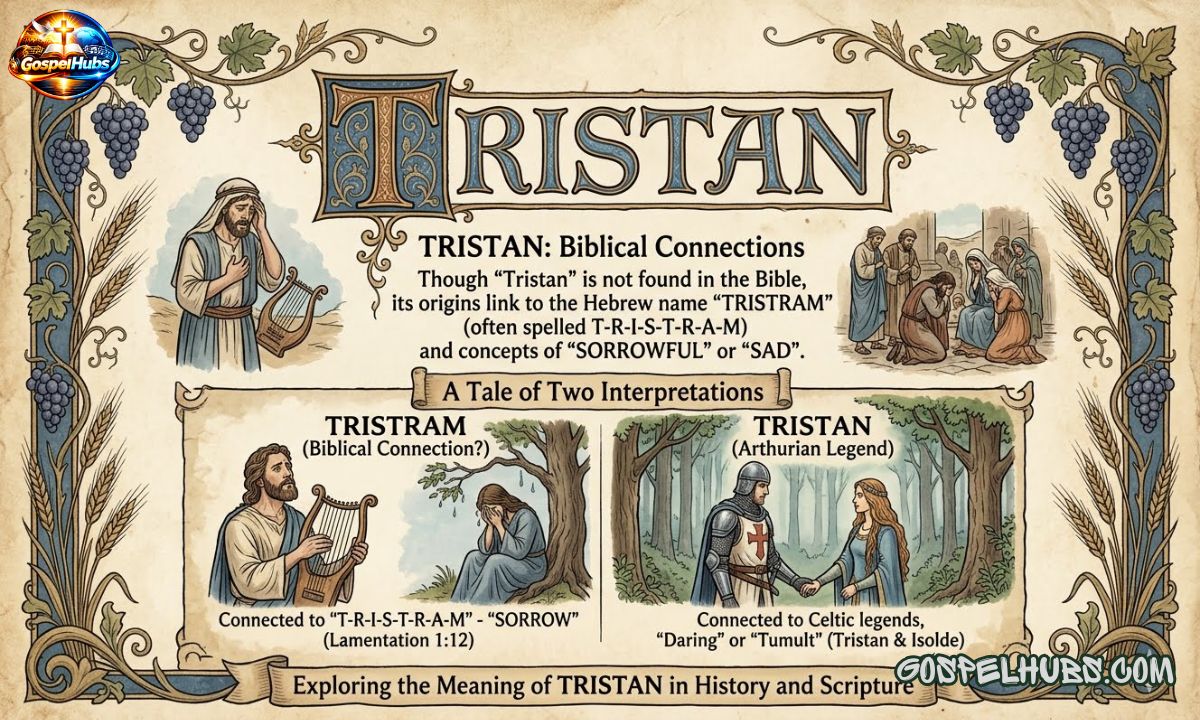
Many people search for the Tristan name meaning in the Bible because they want to know whether it is a biblical name and what it represents spiritually. Parents also want to learn if Tristan is a good Christian name before choosing it for their child.
The simple answer is that Tristan does not appear in the Bible. However, the Bible teaches timeless truths about identity, faith, and purpose that can help us understand the spiritual value of this name. This guide explains its origin, symbolism, and Christian meaning in simple language.
What Does Tristan Name Mean in the Bible?
The name Tristan is not found in either the Old Testament or the New Testament. It is not a Hebrew biblical name.
Even so, many Christians connect Tristan with biblical themes such as:
- Strength through hardship
- Faith during difficult times
- Spiritual growth
- Hope after sorrow
- Courage to keep trusting God
Although the name is not mentioned in Scripture, these values are clearly taught throughout the Bible.
Is Tristan a Biblical Name?
No.
Tristan is not a biblical name because no person with this name appears in the Bible. However, many Christian families still choose names that are not directly found in Scripture. What matters most is whether the name carries a positive meaning and reflects godly values. The Bible places greater importance on a person’s faith and character than on the origin of their name.
Biblical Meaning of Tristan
Although Tristan is not biblical by origin, many believers see symbolic biblical lessons in its traditional meanings.
| Traditional Meaning | Possible Biblical Connection |
| Sorrow | God brings comfort to those who trust Him |
| Strength | Faith grows through trials |
| Courage | Standing firm during hardship |
| Hope | God turns pain into purpose |
These ideas are based on biblical principles rather than the name itself.
Tristan Name Origin and Historical Background
Tristan has ancient European roots.
Most language experts believe the name comes from:
- Celtic traditions
- Welsh origins
- Old French literature
The name became famous through the medieval story of Tristan and Isolde, one of the best-known romantic legends in European history. Some scholars connect the name with the Latin word tristis, meaning “sad” or “sorrowful.” Others trace it to older Celtic words meaning “noise” or “tumult.” Because of this, its exact origin remains debated.
Tristan Name Meaning in Hebrew and Greek
Tristan has no direct Hebrew meaning because it did not originate in ancient Israel. Likewise, it is not originally a Greek biblical name. However, some Christians compare its symbolic meaning with biblical ideas found in Hebrew and Greek Scripture.
- Perseverance
- Faithfulness
- Endurance
- Spiritual maturity
These connections are symbolic rather than historical.
Spiritual Significance of the Name Tristan
Spiritually, Tristan reminds many believers that difficult seasons can build stronger faith.
Possible spiritual lessons include:
- Trust God during hardship.
- Remain faithful in every season.
- Let challenges strengthen your character.
- Grow closer to God through prayer.
These lessons reflect common biblical teachings about perseverance.
Christian Perspective on the Name Tristan
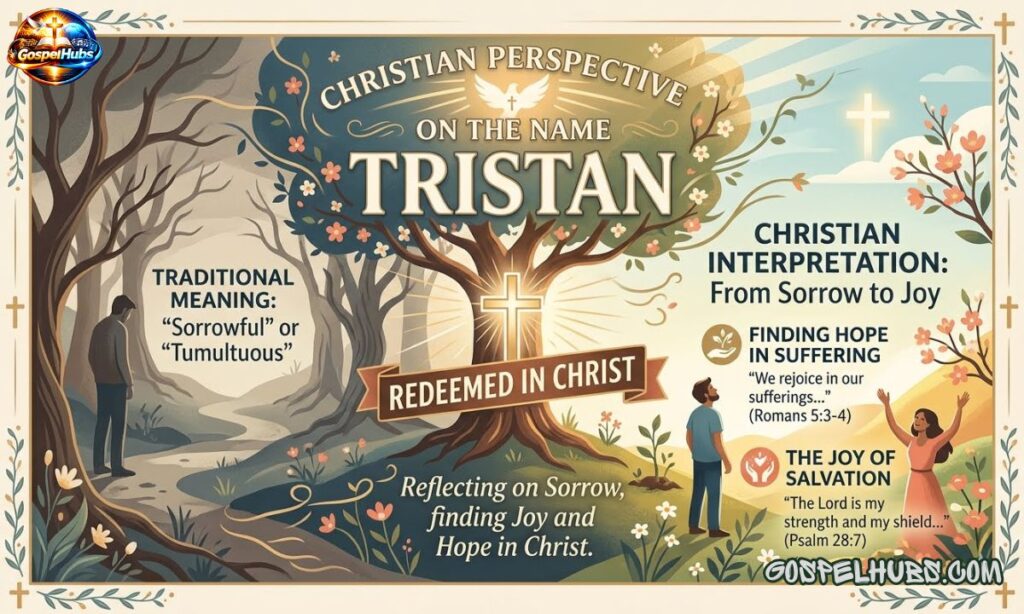
Most Christian churches do not consider Tristan to be an unbiblical or inappropriate name.
Parents often choose Tristan because it sounds:
- Strong
- Classic
- Respectful
- Meaningful
Christian parents usually focus more on raising children in faith than on whether a name appears in the Bible.
The Symbolism of Tristan: Strength, Courage, and Faith
Many believers associate Tristan with positive spiritual qualities.
Strength
Life brings challenges, but faith helps believers remain strong.
Courage
Following God often requires courage even when circumstances are difficult.
Faith
The greatest biblical lesson connected with Tristan is continuing to trust God despite hardships. Together, these qualities create a meaningful spiritual interpretation of the name.
What the Bible Teaches About Names and Identity
The Bible teaches that names often carry purpose and identity. Throughout Scripture, God sometimes changed people’s names to mark a new beginning.
Examples include:
- Abram becoming Abraham
- Jacob becoming Israel
- Simon becoming Peter
These examples remind Christians that identity comes from God’s calling rather than a name alone.
Tristan in Celtic and Christian Tradition
In Celtic tradition, Tristan became famous through stories of bravery, loyalty, and sacrifice. Within Christianity, the name is appreciated more for its symbolic lessons than for biblical history.
Many believers see Tristan as representing:
- Loyalty
- Compassion
- Endurance
- Hope
- Personal growth
These qualities align well with Christian values even though the name itself is not biblical.
Biblical Interpretations of Tristan in Dreams and Everyday Life
Some people wonder whether seeing or hearing the name Tristan in dreams has biblical meaning. The Bible does not provide a specific interpretation.
However, some Christians view it as a personal reminder to:
- Pray more faithfully.
- Trust God during uncertainty.
- Stay hopeful.
- Keep growing spiritually.
Dream interpretations should always be tested against Scripture rather than personal feelings alone.
Practical Faith Lessons Inspired by the Name Tristan

The name Tristan can inspire practical Christian living.
- Stay faithful during difficult seasons.
- Pray before making important decisions.
- Show kindness even when life is hard.
- Remember that God can bring good from suffering.
- Build your identity in Christ rather than in circumstances.
These lessons apply to every believer regardless of their name.
Why Do Christian Parents Choose the Name Tristan?
Many Christian parents choose Tristan because it combines beauty with meaningful symbolism.
Reasons include:
- Easy pronunciation
- Timeless style
- Strong character associations
- Positive spiritual symbolism
- Popular yet distinctive sound
Although it is not a biblical name, many families feel it reflects hope, courage, and perseverance.
Common Misconceptions About Tristan in the Bible
Several myths appear online about Tristan.
- Myth: Tristan appears in the Bible.
- Fact: It does not appear anywhere in Scripture.
- Myth: Tristan is a Hebrew name.
- Fact: It has Celtic and European origins.
- Myth: Christians should only use biblical names.
- Fact: Many respected Christian names are not found directly in the Bible.
Frequently Asked Questions
Is Tristan mentioned in the Bible?
No. Tristan is not mentioned anywhere in the Bible.
Is Tristan a good Christian name?
Yes. Many Christians choose Tristan because its symbolic values align with biblical principles.
What does Tristan symbolize spiritually?
It often symbolizes perseverance, courage, hope, and faith during difficult times.
Does Tristan have a Hebrew meaning?
No. Tristan has no original Hebrew meaning.
Can Christians name their child Tristan?
Yes. There is no biblical teaching that discourages using the name Tristan.
What is the origin of Tristan?
Tristan comes from Celtic and Old French traditions and later became famous through medieval literature.
Conclusion
The Tristan name meaning in the Bible is symbolic rather than literal. The name does not appear in Scripture and is not of Hebrew origin, yet it reflects biblical themes of endurance, hope, courage, and spiritual growth.
For Christian families, the most important truth is not whether a name is found in the Bible, but whether a person’s life reflects faith, love, and obedience to God. Tristan remains a meaningful choice for those who value strength, perseverance, and trust in God’s purpose.

David is the founder of gospelhubs.com, a site dedicated to Bible Verses and Prayers clever wordplay. He loves turning language into laughter and making words wonderfully witty.